Solar street lights face wind loads that are often underestimated. Their panels act like small sails above slender steel poles. The real risk appears during gusts, not calm weather. So, what is the wind resistance rating for solar street light poles? The answer depends on local wind speed, pole height, panel area, mounting angle, terrain, and foundation design.
This guide reviews ten common wind resistance ratings used in solar street lighting projects. It compares practical values such as 27, 30, 35, 40, and 45 m/s, while explaining why these figures cannot be selected by appearance alone. ASCE 7-22 requires designers to consider basic wind speed, exposure category, topography, importance, and pressure effects. AASHTO’s structural support specifications also provide widely used guidance for poles supporting luminaires and roadside equipment. In Europe, EN 40-3-1 and EN 40-3-3 address wind actions and verification for lighting columns. These standards support engineering decisions, but they do not create one universal rating.
Small details matter. A 2.5-meter solar panel can increase overturning force significantly. Loose anchor bolts may fail before the pole bends. A sandy foundation can perform differently from compacted soil. National weather records, including NOAA climate datasets, help identify local wind conditions, but site exposure still requires professional review. The Global Solar Power Tracker and IRENA renewable-energy statistics show rapid solar deployment worldwide, yet installation quality remains uneven. That is worth questioning. A printed wind rating is useful, but a verified calculation, material certificate, and foundation check provide stronger evidence. Expect clear comparisons, practical selection advice, and a few uncomfortable limitations.
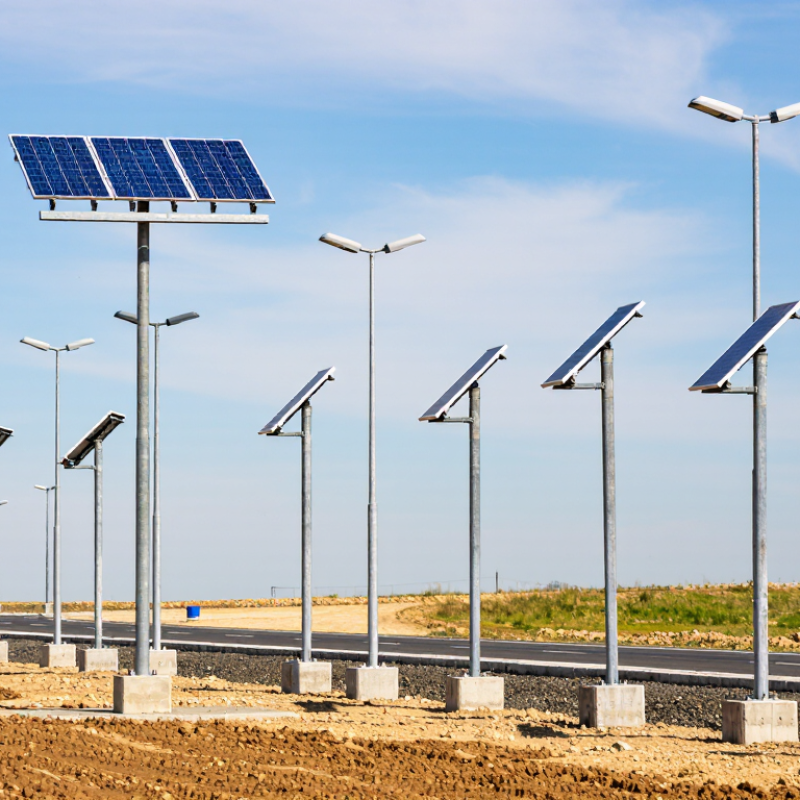
Understanding a wind rating requires more than reading one speed value. ASCE 7-22 defines basic wind speed using a three-second gust at 10 meters above ground. At 40 m/s, that gust can create about 2.46 kPa of velocity pressure before exposure and shape factors are applied. The number looks precise. It is not the complete design answer.
A practical top-ten review should check wind speed, gust duration, terrain exposure, pole height, topography, projected area, drag coefficients, panel tilt, foundation capacity, and corrosion allowance. EN 40-3-1 requires lighting columns to account for wind actions, equipment area, and local conditions. Solar panels often increase the overturning moment, especially when mounted high and tilted toward prevailing winds. A pole passing a basic speed test may still fail at its foundation.
The installation site matters most.
ISO 4354 recommends evaluating wind actions with local terrain and structural geometry, not generic catalog ratings. Field inspections commonly find loose anchors, undersized base plates, and underestimated panel area. These details are easy to miss. NREL’s solar resource assessments also show why regional conditions vary sharply, although solar data cannot replace structural wind analysis. Specify the reference height, wind standard, return period, safety factors, and soil assumptions. Without those details, “40 m/s rated” remains incomplete and difficult to compare. (Sources: ASCE 7-22; EN 40-3-1; ISO 4354; NREL solar resource assessment guidance.)
Solar street light wind ratings depend on more than a single number. A pole marked for 150 km/h may perform differently at a coastal site or on an exposed hill. Engineers assess basic wind speed, terrain category, installation height, and local gust conditions. The solar panel also acts like a sail, increasing projected area and overturning force.
Pole diameter, taper, steel grade, wall thickness, and connection design directly affect wind load capacity. A wider base usually improves stability, but it cannot correct a weak foundation. Anchor bolts, concrete strength, soil bearing capacity, and embedment depth require equal attention. In field inspections, loose bolts and poor drainage often create greater risk than expected. That finding deserves more attention. Dynamic vibration, corrosion allowance, and repeated wind cycles should also enter the design review. Top-ten rating tables are useful for comparison, but they are not universal approvals. Local structural codes and stamped calculations remain more reliable.
Tips: Confirm the site wind speed before selecting a rating. Check the panel’s projected area, not only its wattage. Request calculations covering the pole, foundation, bolts, and luminaire. A preliminary rating may look adequate, yet soil conditions can change the result. When uncertainty remains, use conservative assumptions and obtain an independent engineering review.
Comparing the top ten ratings requires more than reading the highest number. Check whether each rating uses the same wind speed, exposure category, and return period. A pole rated for 40 m/s may not outperform one rated for 38 m/s if their testing conditions differ. Review the pole height, shaft diameter, wall thickness, and projected panel area. A large solar panel catches stronger wind, like a flat sail above an open road. Foundation depth matters too. A strong pole can still fail if its anchoring soil is weak.
Tips: Ask for structural calculations, test reports, and the design standard used. Confirm whether the rating describes survival wind or continuous operating wind. Compare gust speed, not only average speed. Check corrosion protection and bolt specifications. Small details often change the result.
For a reliable comparison, place all ten products in one table. Record wind speed, pole height, panel dimensions, material grade, foundation requirements, and safety factor. Independent engineering review adds useful confidence, especially in coastal or typhoon-prone areas. Field experience also matters; inspect nearby poles after severe weather when possible. I would not trust a single headline rating. Some documents omit soil assumptions or installation limits, and that weakness deserves attention. A practical choice balances wind resistance, maintenance access, local conditions, and verified documentation.
Wind resistance for solar street lights starts with site data, not a universal “top 10” rating. ASCE 7-22 uses location-based basic wind speeds and a 700-year mean recurrence interval for Risk Category II structures. In Europe, EN 40-3-1 and EN 40-3-2 guide wind actions and structural verification for lighting columns. IEC 60598-2-3 also addresses road-lighting safety, but it does not replace pole engineering. A catalog number alone is not proof.
For example, a 40 m/s gust creates nearly 0.98 kPa of velocity pressure before safety factors. A wide solar panel increases projected area and overturning force.
Engineers should check pole height, panel tilt, luminaire area, gust exposure, foundation depth, soil strength, bolt grade, and corrosion allowance. Static calculations matter. Physical testing matters too.
The uncomfortable detail is fatigue. Repeated gusts can loosen connections even when one extreme load appears acceptable. Some projects also understate the panel’s sail effect.
Tips: Request the complete design wind speed, exposure category, pressure coefficients, and foundation drawings. Ask whether testing followed EN 40-3-2 or an equivalent method. Inspect anchor bolts after the first storm season. Keep records. A lower rating may be unsafe, but an excessively high rating can signal poor sizing or unnecessary cost. Review the assumptions carefully.
Top 10 Solar Street Light Pole Wind Resistance Ratings
Selecting a pole rating starts with the installation area, not the lamp wattage. ASCE 7-22 wind maps assign basic wind speeds from about 90 to 150 mph across many U.S. locations. That equals roughly 40 to 67 m/s. Local exposure can raise the design load significantly.
For early procurement, engineers may screen ten wind-speed bands: 30, 34, 38, 42, 46, 50, 54, 58, 62, and 66 m/s. These are not universal product classes. They are practical comparison points. Open farmland may need a lower band, while coastal roads, hills, and hurricane-prone zones demand higher resistance. AASHTO LRFD specifications also require attention to pole height, luminaire area, foundation behavior, and gust effects.
Solar panels complicate the calculation. Their broad, flat surface catches wind like a small sail. The Global Wind Atlas, developed by DTU and the World Bank, helps identify regional wind conditions, but it does not replace a structural check. Engineers should verify projected panel area, tilt angle, soil strength, anchor bolts, and fatigue exposure. A 40 m/s rating can be inadequate if the panel enlarges the effective wind area.
A neat rating table can still mislead. Installation records often reveal problems that drawings miss, especially loose foundations or uneven ground. Require stamped calculations against ASCE 7, AASHTO, or EN 40, according to the project location. I would also review drainage and corrosion protection. Wind strength alone is not enough.
Choosing the Right Pole Rating for Different Installation Areas
The chart presents conservative planning benchmarks for minimum design wind speed, ranging from sheltered urban locations to highly exposed coastal and ridge areas. Final pole selection should be verified against local building codes, site exposure, foundation design, solar panel dimensions, terrain, and the required return period.
Wind speed, pole height, shaft diameter, wall thickness, and steel grade all matter. The solar panel also catches wind like a flat sail. Foundation strength matters too.
Not always. Ratings may use different test conditions, exposure categories, or gust assumptions. Compare the details, not just the headline number.
A broad panel increases the pole’s projected wind area. Its size and tilt angle can change the force on the pole. Wattage alone tells little.
Review anchor bolts, concrete strength, soil capacity, and embedment depth. Uneven ground or poor drainage can weaken an otherwise sturdy installation. Details matter.
Speeds from 30 to 66 m/s can serve as practical comparison points. They are not universal product classes. Local terrain and gusts may change the design need.
Ask for structural calculations, test reports, material details, and foundation requirements. Check whether the rating covers survival winds or regular operating conditions.
No rating fits every location. Coastal roads, open hills, and farmland can face different wind exposure. I would still verify soil and installation assumptions.
Inspect nearby poles after severe weather when possible. Look for loose bolts, leaning bases, corrosion, or water pooling. Drawings can miss these details.
This guide explains how to understand wind resistance ratings for solar street light poles and why they matter for safe, reliable outdoor lighting. What is the wind resistance rating for solar street light poles? It is the maximum wind pressure or speed a pole and its foundation are designed to withstand without excessive bending, instability, or structural failure. The rating depends on pole height, material strength, wall thickness, arm design, solar panel size, foundation depth, soil conditions, and local exposure.
The article compares the top 10 wind resistance ratings by examining their load capacity, design features, and suitability for different environments. It also introduces common testing methods, safety requirements, and the importance of professional structural assessment. Areas exposed to hurricanes, coastal winds, open terrain, or extreme weather generally require higher-rated poles than sheltered urban locations. Selecting the correct rating helps reduce maintenance risks, protect equipment, and ensure dependable lighting throughout the pole’s service life.

NexLt Light