Choosing the correct wattage is no longer a simple matter of selecting the biggest number. In 2026, efficient LED flood lights can produce more lumens with fewer watts. This changes how property owners, contractors, and facility managers should compare products. The real question is not only “How many watts?” It is “How much useful light reaches the target?”
Architectural lighting designer Randall Whitehead writes, “Lighting is the fourth dimension of architecture.” His observation matters outdoors, where light shapes safety, visibility, comfort, and appearance. Learning How to choose the right wattage for LED flood lights requires attention to mounting height, beam angle, surface color, operating hours, and surrounding darkness. A 100-watt flood light may suit a small driveway, yet fail to illuminate a tall warehouse wall evenly. A 200-watt model might work there, but create harsh glare near neighboring windows.
Lumens matter more than wattage alone. Check the fixture’s delivered lumens, not only its advertised power rating. Look for reliable photometric data, suitable IP protection, and a color temperature that fits the space. Warm light can feel calmer. Neutral white often supports clearer outdoor visibility. Controls, dimming, and motion sensors can also reduce wasted energy. Still, no formula is perfect. Real sites contain trees, reflective walls, uneven ground, and shadows that product charts cannot fully predict. A practical choice may need testing after installation. That small correction is easy to overlook. This guide examines the details behind the decision, helping readers balance brightness, efficiency, safety, and long-term value.
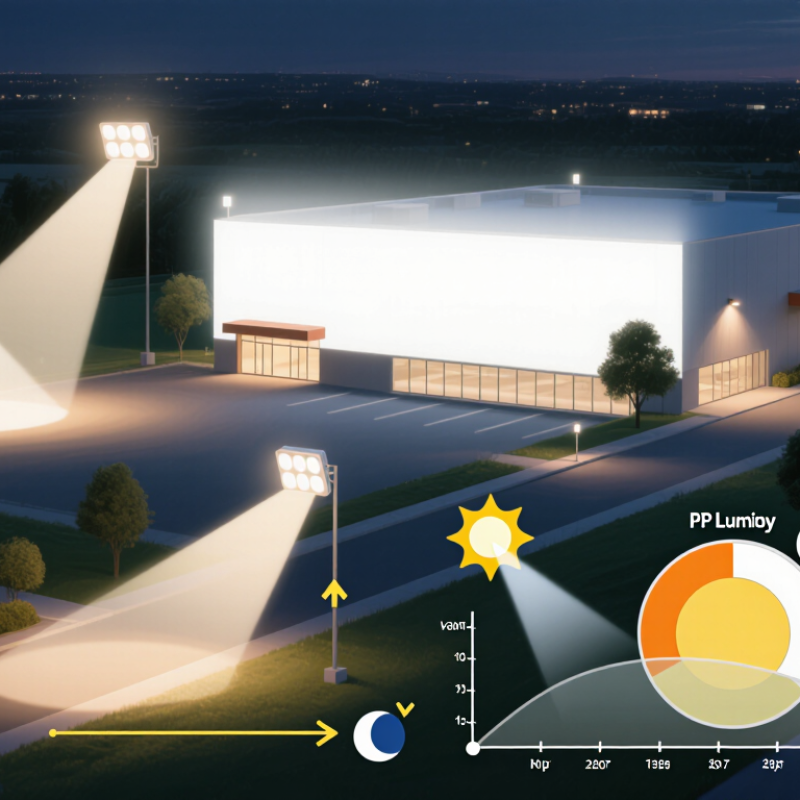
In 2026, LED flood light wattage should be treated as an energy input, not a brightness label. Wattage shows how much electricity the fixture uses. Lumens show how much visible light it produces. A modern 30-watt flood light may outperform an older 50-watt unit, depending on optical design and driver quality. Many quick buying decisions fail here. More watts can create extra heat, glare, and unnecessary energy use.
Start with the area and lighting task. A small doorway may need 10–20 watts, while a driveway or workshop could require 30–80 watts. These figures are only practical estimates. Mounting height, beam angle, surface reflectance, and surrounding darkness can change the result.
At eight metres, a narrow beam may create a bright central spot and weak edges. A wider beam spreads light more evenly but may need greater lumen output. Check lumens and coverage at the actual mounting height.
For 2026 installations, motion sensors, dimming, and schedules can reduce operating hours. Choose a suitable IP rating for exposed locations, and check color temperature before installation. Cool white light can reveal detail, but it may feel harsh near homes.
I once trusted a specification sheet too much. The fixture looked powerful, yet a dark path remained beside the gate. Repositioning it worked better than adding wattage.
Wattage measures electricity use, not brightness. Lumens measure visible light output. More watts can mean extra heat, glare, and wasted energy.
A small doorway may need 10–20 watts. Around 2,000–4,000 lumens may suit a 20-square-meter entrance. Check coverage at night.
No. Consider mounting height, beam angle, surface color, and darkness. A large yard may need several fixtures instead of one powerful lamp.
At three metres, a wide beam can cover a patio evenly. At eight metres, light spreads farther but becomes weaker on the ground.
Lumens describe total light output. Lux describes light reaching a surface. Walkways may need about 10–20 lux, while detailed work may need 50 lux or more.
Yes. Optical design and driver quality matter. A modern 30-watt fixture may outperform an older 50-watt fixture. Wattage alone misleads.
Consider IP65 or higher for dusty or wet locations. Confirm the rating through reliable technical documentation, not only sales descriptions.
Sensors can activate lights only when movement occurs. Dimming, schedules, and daylight detection can reduce operating hours. Simple controls often work best.
Test one temporary fixture at night. Check bright and dark areas, sensor response, glare, and energy use for several days. My first estimate can be wrong.
A small reserve may support future coverage or longer operating hours. However, excess capacity can create glare and waste energy. More light is not always better.
Choosing the correct wattage is essential for achieving bright, efficient, and comfortable lighting in 2026. How to choose the right wattage for LED flood lights begins with evaluating the area size, mounting height, surface reflectivity, and required light levels. Wattage indicates energy consumption, but lumens show actual brightness, so both should be considered together. Beam angle also matters: wider beams cover larger areas, while narrower beams provide stronger, more focused illumination for security, pathways, or high-mounted installations.
For indoor and outdoor projects, select the lowest wattage that delivers sufficient lumens without creating glare or unnecessary energy use. Outdoor fixtures should include suitable weather protection, while indoor models should match the room’s purpose and ceiling height. Smart controls such as motion sensors, timers, and dimming can further reduce energy consumption. It is also wise to allow for future lighting needs, changes in layout, and possible upgrades when selecting the initial wattage.

 NexLt Light